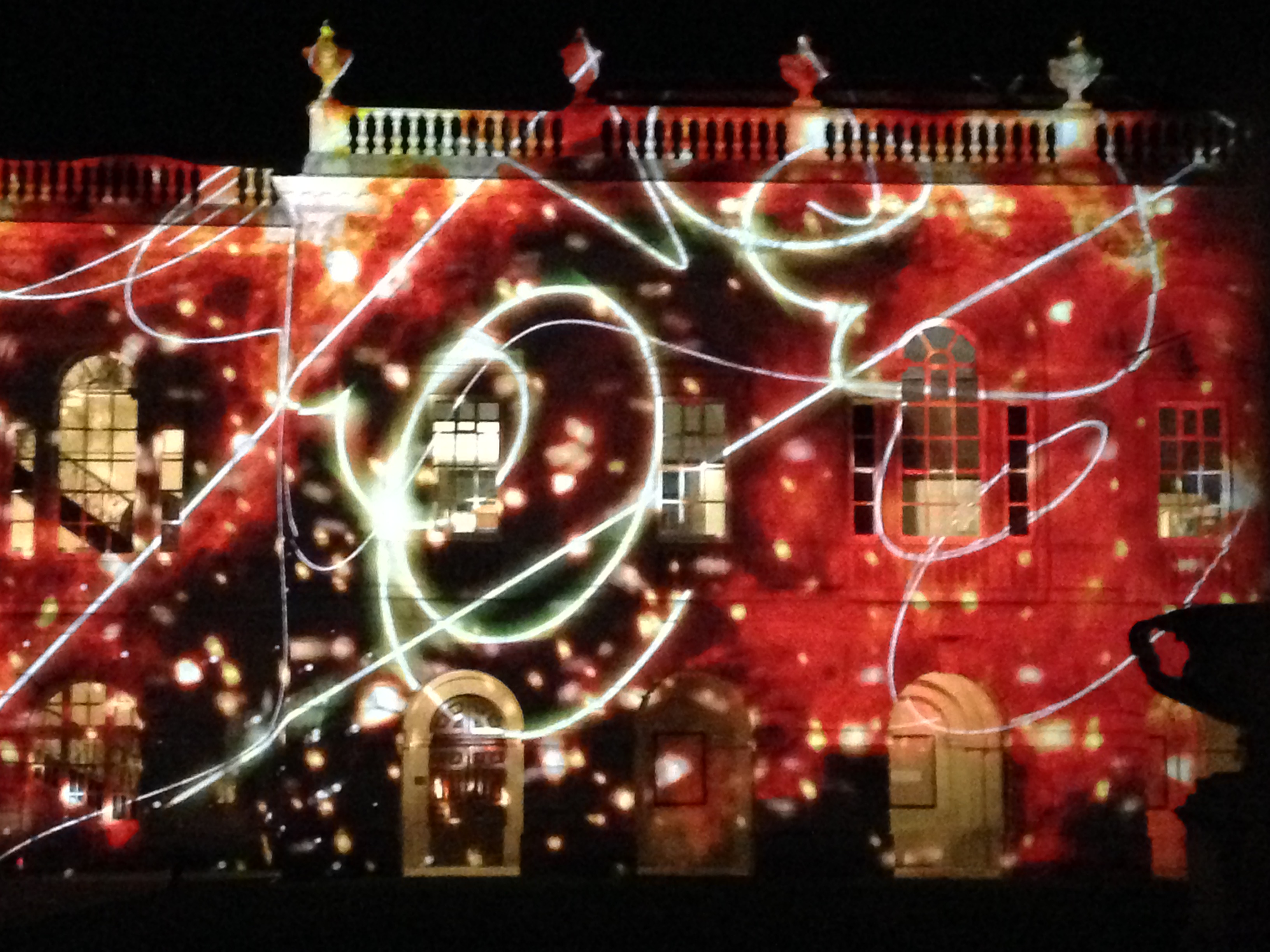
In Britain we find two emblematic examples of women’s libraries, at opposite ends of the spectrum. Both of national importance, both with a troubled history, the Women’s Library in London (TWL) and the Glasgow Women’s Library (GWL) embody, in different ways, their original raison d’être: to preserve women’s history and to promote gender equality.
TWL is the 2002 rebranding of the Fawcett Library, itself a reincarnation of the original Library of the London Society for Women’s Service. The Society was a non-militant organization led by suffrage campaigner Millicent Fawcett (1847-1929), and the library was formally established in 1926 to preserve the by then abundant material produced by the women’s movement. It also provided up-to-date information on economic, social and political issues to the newly-enfranchised women. Its collections continued to grow through important donations from other women’s societies, eminent women and regular acquisitions. This expansion was followed by a period of crises in the 1970s. The library’s initial ambivalence towards the new wave of women’s activism (Pankhurst 1987, 229-31) cast a shadow over its feminist credentials that has persisted over the years (Ilett 2003). Its move to a crammed basement in what is now London Metropolitan University in 1977 reinforced the image of an organisation focused on preserving the past for a marginal constituency, i.e. feminist historians. The trend changed in the following decades when the expansion of women’s studies and the growing prestige (and size) of the collection landed heritage lottery funding to purchase a new site. In 2002 the former wash houses in the East End became the new home of the TWL. The special location and the modern facilities – hailed as an example of feminist architecture (Adams 2014) – were matched by a new agenda of public engagement. More inclusive policies of collection development were also introduced, and projects to document the lives and experiences of women other than the white middle-class /elite (Byatt 2008, 124-125). In this period TWL received awards, museum status and UNESCO recognition (Liddington 2013, 273). In 2013 however the iconic building had to be left behind to continue to keep the collection together. The current location at the London School of Economics (here) provides the stability that comes with the custodianship of an elite institution.
The Glasgow’s Women’s Library (GWL) is a third-wave feminist initiative by a women’s art collective based in the Scottish city. From its inception in 1991 the library was conceived as a women’s centre, whose purpose went beyond that of an arts library or archive. In 1995 GWL became the home of the National Lesbian Archive (established in 1987) and gradually expanded its collections and information services, becoming “a centre for women’s literacy and learning, and a focal point for women’s activism” (Ilett 2003, 301-303). This vocation is still central for today’s GWL and it translates into educational and engagement activities with disadvantaged women, and across communities. Its collections are based on donations and its work heavily reliant on volunteers, but its innovative work and original materials have earned GWL recognition at national level as the Museum of Women’s History (Patrick 2017). Substantial funding from the National Lottery and government investments provided the GWL permanent premises in 2013, and renewed confidence in its wide-ranging programming and services (here).
A few other women’s collections and archives exist across the country, mostly housed in university libraries (see below), but to date no national network exists of the kind we find in Italy and Spain (see my previous posts). The forthcoming exhibition at the British Library ‘Unfinished business: the fight for women’s rights’ (here) is perhaps a sign that the long neglect of women’s history and feminist issues by mainstream libraries is starting to change.
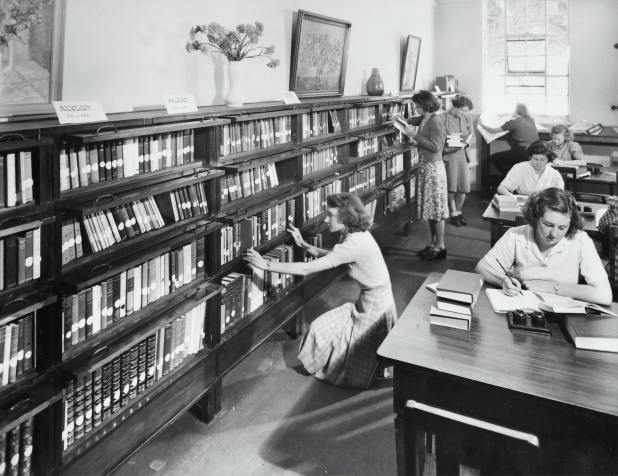
Emily McPherson College Library, Russell St., circa 1960s (Credit: Museums Victoria)
Bibliography
Adams, A. (2004). “Architecture for feminism? The design of the Women’s Library, London.” Atlantis, 29(1), 99-105.
Byatt, A. (2008). “’World became one village’. How women’s history can use new media,” in: Wieringa, S. (ed.), Traveling Heritages: New Perspectives on Collecting, Preserving, and Sharing Women’s History. Amsterdam: Amsterdam University Press, 119-130.
Ilett, R. C. (2003). Outstanding issues: gender, feminisms and librarianship. PhD thesis, University of Glasgow. http://theses.gla.ac.uk/4072/
Liddington, J. (2013). “Fawcett Saga: Remembering the Women’s Library across Four Decades.” History Workshop Journal, 76(1), 266-280.
Pankhurst, R. (1987). “Collection development and women’s heritage: The case of the Fawcett Library.” Women’s Studies International Forum, 10(3), 225-239.
Patrick, A. (2017). “Glasgow’s Women’s Library,” in: Wiersma, A. & Römkens, R. (eds), Gender and Archiving. Past Present and Future, Amsterdam: Hilversum, 85-92.
Russell, P. & Jolly, M. (eds) (2020), Unfinished business: the fight for women’s rights. University of Washington Press: 2020.
Major women’s collections and archives
https://feministarchivenorth.org.uk/
http://feministarchivesouth.org.uk/
https://www.library.wales/collections/learn-more/archives/welsh-womens-archives
 the accidental library apprentice