Spain lays claim to the first still active women’s library in Europe. Opened in Barcelona in 1909, it was founded by Francesca Bonnemaison (1872-1949), an intellectual of the Catholic bourgeoisie, with links to the Catalan elite. The small library received funds from a parish church and donations by local well-to-do ladies. While women of all classes were welcome, the target audience was single working women with no other access to free education. The initiative was such a success that the following year the 650-book library was renamed Institut de Cultura e Biblioteca Popular de la Dona (Women’s Library and Cultural Centre), and classes in all sorts of subjects were given by women for women. Inspired by the nascent women emancipation movements, Bonnemaison’s work has been part of the ‘conservative feminism’ of the time (Plana and Vergés 2015, 133). Education and professional training were not stepping stones for women’s emancipation from men, but ways to better complement husbands, fathers etc. in the professional or family sphere. Bonnemaison was not looking to subvert what was seen as women’s natural role as homemakers, but to help them be better mothers, daughters and wives (Cabó i Cardona 1995, 67-68).
Perhaps it is true that these were not exactly feminist or progressive views; in the context of the time, however, they provided important opportunities for Spanish working women. Muñoz- Muñoz and Jiménez (2015, 57-59) talk about similar initiatives in Madrid, outside the Catholic sphere. In 1915 the Residencia de Señoritas, the first university institute for girls,* provided a modern library collection which was enriched and opened to all women in 1926 when the institute joined forces with the American International Institute for Girls. In 1926 another important centre, the Lyceum Club Feminino, became a meeting point for upper-class women of the progressive intelligentsia. Not much is known of its library other than it was well-endowed and in line with the aims of the Club: the promotion of women’s cultural and social emancipation through courses, conferences, artistic and cultural events. With the advent of the Republic (1931-39) the Club became politicized and did not survive the advent of the dictatorship in 1940, and nor did its library. The Residencia de Señoritas was spared, renamed, and its original collection transferred to the Universidad Complutense (here).
Bonnemaison’s centre in Barcelona was also affected during Franco’s regime: the Institute was taken over by the women’s section of the Falange, while the library became part of Barcelona’s public library network (Cabó i Cardona 1994, 69) (virtual tour). It was only after Franco’s death (1975) that Spanish women’s demands for equality are taken on board: the 1978 Constitution removes sex discrimination, and in 1983 the Instituto de la Mujer (Women’s Institute) is set up to promote information services for women, and equal opportunities. This is the inception of what has been called ‘state feminism’ (Muñoz- Muñoz and Jiménez 2015, 57). The creation of women’s documentation centres within universities and other public institutions has formed the so-called ‘second-wave’ women’s libraries. In 1995 the network of what is now 20 women’s documentation centres was created (here), following the Italian experience of Lilith (see my previous post).
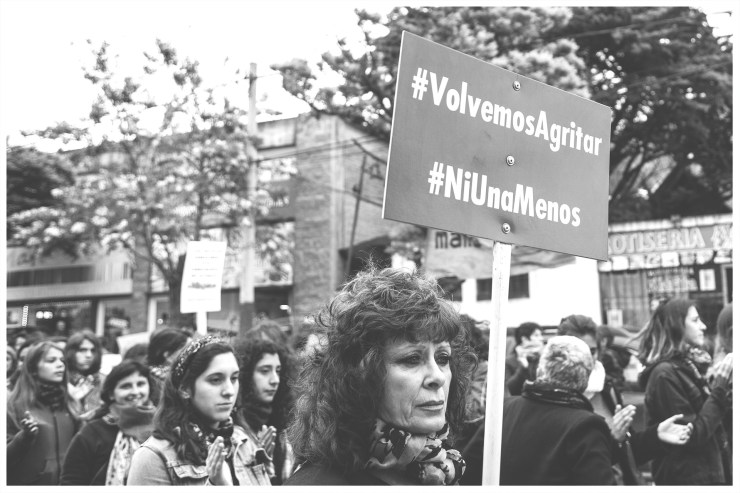
This success story of preservation and active commitment to gender issues is not without its victims. Feminist libraries are one of them: the Biblioteca de Mujeres in Madrid (here) has had a difficult life since its inception in 1985 (Mediavilla Herreros 2017), and is still waiting for a suitable home for its ca. 30,000 books; housed in a basement they are only accessible on request (see protest).
There are undeniable advantages in institutional feminism, but ….
* Access to university education for women was officially sanctioned in 1910.
By Abel Escobar (Pixabay)
Bibliography
Cabó i Cardona, A. (1995). “Biblioteca Popular Francesca Bonnemaison, 1909-1995: història i ús actual.” Item: revista de biblioteconomia i documentació, 17, 66-73. Permalink: https://www.raco.cat/index.php/Item/article/view/22469
Mediavilla Herreros, M. (2017), “Biblioteca de Mujeres en Madrid.” Rei, 5, 153-159. DOI: 10.5944/rei.vol.5.2017.20735
Muñoz-Muñoz, A., and M. Jiménez (2015). “La formación de las bibliotecarias y las bibliotecas de mujeres en España.” Revista General de Información y Documentación, 25(1), 47-68.
Plana, M. D., and M. P. Vergés (2015). “La Socialización de los Saberes Femeninos: El ‘Instituto de Cultura y Biblioteca Popular para la Mujer’, Barcelona (1900-1936).” Historia Social, 82, 133–147.
2019 Documentary by the ‘Red de Bibliotecas de Mujeres’ to commemorate the 25 years of the network (in Spanish).
 the accidental library apprentice