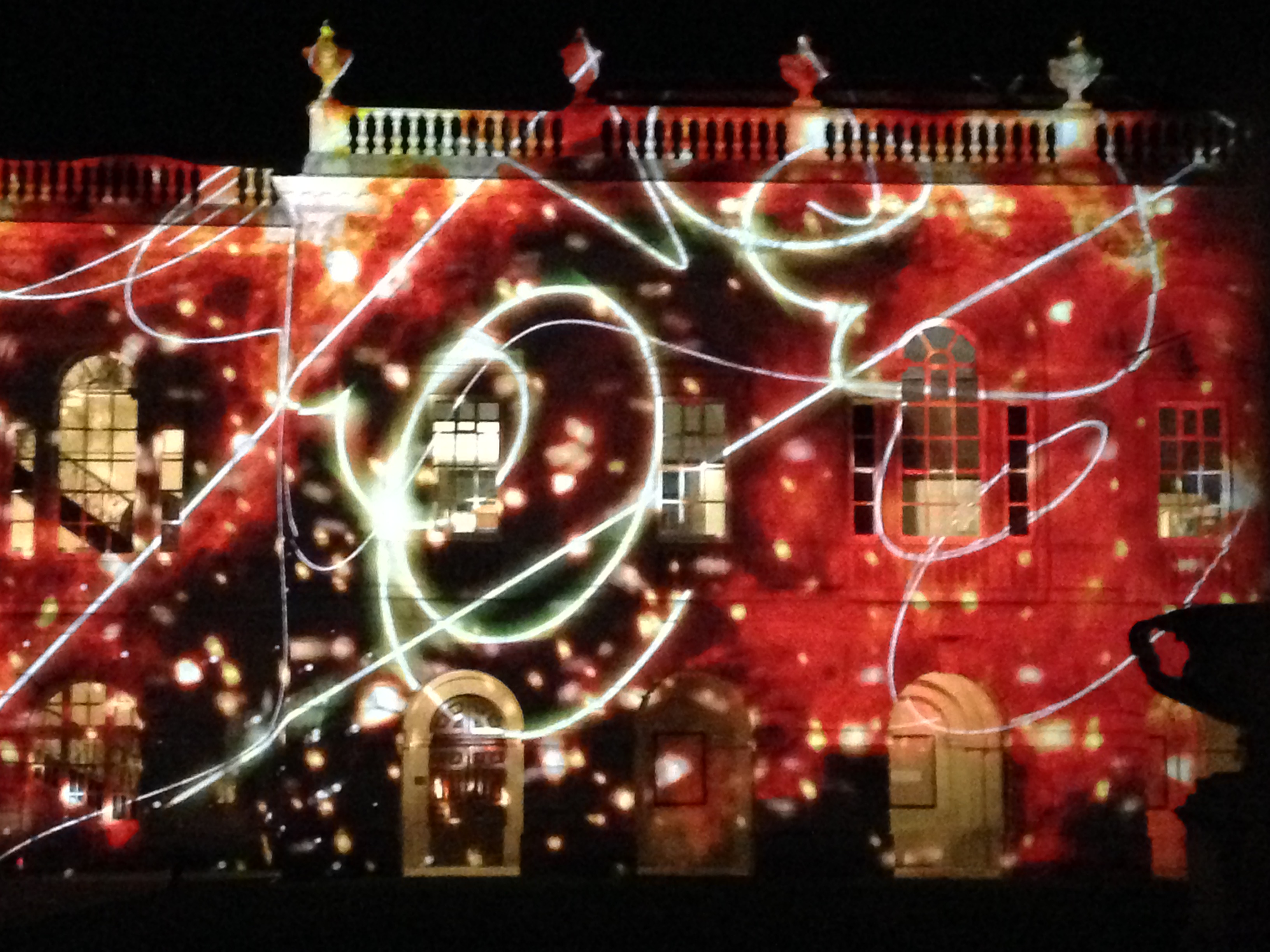
Before the lockdown I visited the exhibition The Rising Tide: Women at Cambridge (here and #womenatcambridge) at the University Library (UL). Women at Cambridge faced fierce opposition as students and academics. In 1869 women’s access to university was finally sanctioned, yet Cambridge was the last British university to grant women degrees in 1948 – Oxford had capitulated some twenty years earlier (clips here and here). Jill Whitelock, from Special Collections, has found that women as readers, including non-university members, were admitted at the UL from 1854. Well, that’s at least one up for Cambridge: women were not allowed into the Bodleian until the 1920s. The exhibition and related events also showcased women’s achievements, and, crucially, set an agenda for the future. Institutions with particularly high levels of misogyny are trying hard to clear their reputation. There have been college events to mark the anniversaries of women’s first admission to their previously all-male premises. Among the fanfare of celebration and donnish brouhaha, I have yet to hear an apology. How can a 450-plus-year-old college celebrate ‘40 years of women at …’ without a shade of embarrassment?
The rich programme of talks was cut short by the pandemic, but it got me thinking about my project, and prompted me to find out more about women in libraries, as users and professionals. I found out that in the UK women started entering the profession in the 1870s thanks to the expansion of public libraries, and to men leaving for more lucrative professions. Their presence in older libraries and in college and university libraries remained sparse for decades. Despite a generally unwelcoming atmosphere, women were outnumbering men by the 1930s; they were however paid lower wages (and lower than in other professions), and rarely appointed to senior posts. This continued well into the 1960s when women made up around 70% of the workforce (McCain 2006, 544-545; Kerslake 2007, 35-36). The low social status of librarianship in the British context has often been linked to the high feminization of the profession, and the low educational entry levels. The introduction of a university course in 1902 and then of a LIS school in 1919 gradually improved the situation. For women however this did not impact career advancement: by the mid 1970s three quarters of students in library schools were women, but only a handful of them held leading roles (McCain 2006, 547).
The question of women as library users has been generally harder to explore because of the lack of data, as information on library use was not broken down by sex until recently (Kerslake 2007). It is known that public libraries provided access to women, and spaces were reserved for them (according to class). Archival work in historical or private libraries usually ends in disappointment, as evidence of women as readers is hard to come by (West 2000), and scholarship in this area is still sparse (Knight et al. 2018). Such invisibility is undoubtedly the legacy of a past where most women’s agency was by proxy – a father, husband, or brother, as Raven (2006, 251) argues with regard to subscription libraries. It is also the legacy of disciplinary culture and (unconscious?) bias …
Well, now I know!
Bibliography
Kerslake, E. (2007). “They have had to come down to the women for help! Numerical feminization and the characteristics of women’s library employment in England, 1871–1974.” Library History, 23(1), 17-40. DOI: 10.1179/174581607×177466
Knight, L., White, M., & Sauer, E. (eds) (2018). Women’s bookscapes in early modern Britain: Reading, ownership, circulation. Ann Arbor: University of Michigan Press.
McCain, J. (2006). “Women and Libraries”, in: Black, A. & Hoare, P. (eds), The Cambridge History of Libraries in Britain and Ireland. 1850-2000. Vol. 3, Cambridge: Cambridge University Press, 543-547.
Raven, J. (2006). “Libraries for sociability: the advance of the subscription library.” in: Mandelbrote, G. & Manley, K.A. (eds), The Cambridge History of Libraries in Britain and Ireland. 1640-1850. Vol. 2, Cambridge: Cambridge University Press, 241-263.
West, S. (2000). “Rare Books and Rare Women: gender and private libraries 1660-1830” in: Kerslake, E. & Moody, N. (eds), Gendering library history, Liverpool: John Moores University, Association for Research in Popular Fictions, 179-195.
 the accidental library apprentice